

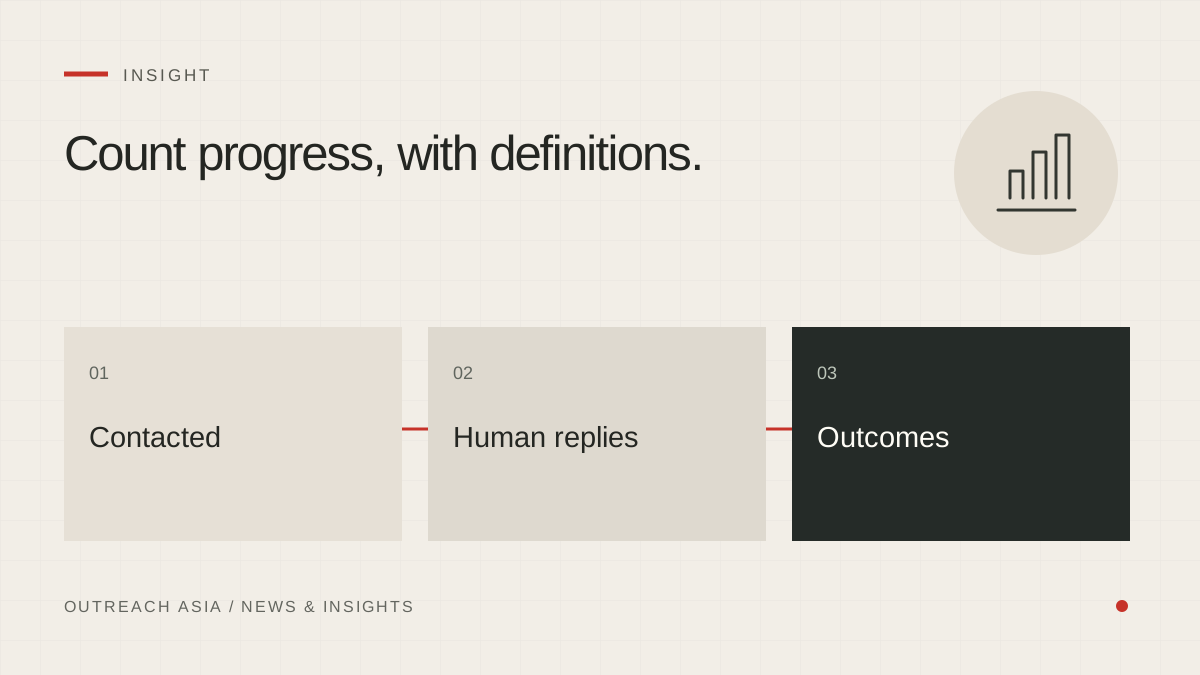
Outreach reports are easy to inflate. Count opens, include auto-replies, treat a referral as interest, and almost any campaign can look healthy. Honest measurement starts with definitions, uses small numbers carefully and says what it does not know.
Count progress, with definitions.
- Contacted
Count each company once, not every follow-up.
- Human replies
Exclude automated mail, newsletters and bounces.
- Interest
Distinguish a concrete request from a polite acknowledgement.
- Meetings & orders
Count confirmed outcomes; do not assume conversion.
Conceptual stages, not measured conversion rates.
Define each stage before you count it
| Stage | Counts | Does not count |
|---|---|---|
| Companies contacted | Each company that received a first message. | Follow-ups, or several contacts at one company counted separately. |
| Replies | A response written by a person. | Auto-responders, out-of-office messages, newsletters and bounces. |
| Interested replies | A request that moves the conversation forward: a catalogue, a company profile, a vendor registration or a partnership discussion. | Polite acknowledgements, “not now” or a forward to another team. |
| Meetings | A call or meeting both sides agreed to, with a date. | A request to “keep in touch”. |
| Orders | A confirmed purchase or signed agreement. | A quotation request or a sample. |
Our own first month, with small numbers
In September 2026, 94 companies received a first email across five client workspaces. Seven replied, a reply rate of 7.4%. Four of those replies were interested by the definition above: they asked for a catalogue, a company profile, a vendor registration or a partnership discussion.
These are small numbers from a short period and a handful of campaigns. They are not a benchmark and they are not a forecast for any other campaign. We report them because they are real, and because the definitions matter more than the percentages.
What the same month taught us
- A hard-bounce rate of 7% showed that addresses must be verified before sending, not after.
- A sending domain without SPF, DKIM and DMARC records got no replies. Domain authentication is a precondition, not a refinement.
- Generic inboxes such as info@ and sales@ received 83% of first emails. That follows from our preference for published company inboxes, and it means many first messages must be forwarded internally before the right person sees them.
Meetings and orders take longer
We are not reporting meetings or orders here. Those happen in each client’s own sales process, often weeks after a first reply, and a figure would need the client’s confirmation. When we do report them, we will say how they were counted and over what period.
Why a reply rate alone misleads
A reply rate combines very different outcomes. A handful of replies might include a catalogue request, a referral, a polite no and a request to stop. Reporting them as one number hides what the campaign achieved. Report each type separately, and treat the interested count as the more useful one.
Percentages on small numbers move sharply. One reply more or fewer among 94 companies changes the rate by about a percentage point. That is a reason to show counts beside percentages, and to compare campaigns only when they are of similar size and period.
We do not treat email opens as a stage. Open tracking is unreliable, because many mail systems load or block images automatically, and an open says nothing about interest. Replies are written by people, and that is where measurement should begin.
Reading a report
When you review any outreach report, including ours, ask four questions. What exactly was counted at each stage? Over what period? How many companies does each percentage rest on? And were automated responses removed? A report that answers those plainly is more useful than one with larger numbers. Our measurement guide sets out a fuller funnel.
Before you move on.
- Each stage has a written definition.
- Automated responses are excluded from replies.
- Percentages are shown with the counts behind them.
- The measurement period is stated.
- Meetings and orders are confirmed before they are reported.
Editorial guidance for planning and review. Examples are illustrative, not customer results. Confirm your workspace’s available controls before live execution.