

The moment a prospect replies, the temptation is to send everything: the full catalogue, the company history, a price list and a meeting link. That usually overwhelms a reply that was often only a small step. The better response is shorter, and it asks as much as it tells.
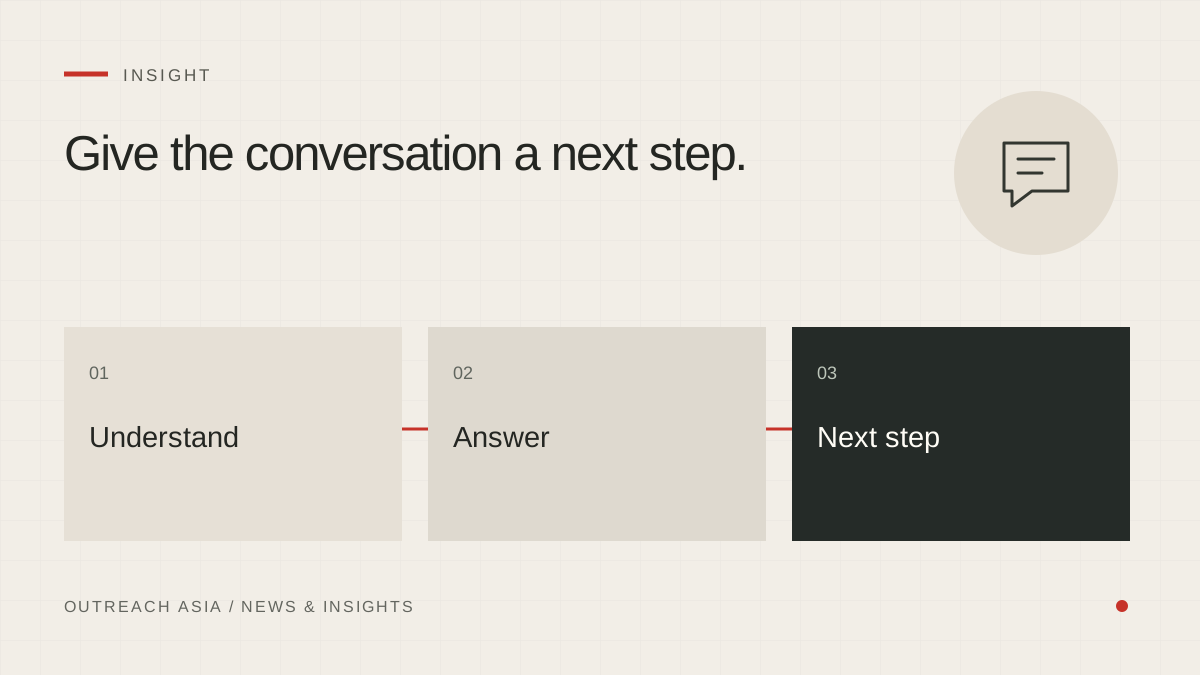
Give the conversation a next step.
- Read the request
Separate a question, referral, interest and a request to stop.
- Answer first
Send what was asked for, using approved material.
- Qualify gently
Ask one useful question about fit or timing.
- Agree a next step
Propose a small action and record who owns it.
A visual summary of this article. Read the full explanation below.
Read what the reply actually says
Replies fall into recognisable types: interested, a question, a referral, the wrong person, not now, and a request to stop. Classify each one by its words, not by what you hope it means. “Please send your catalogue” is a request for information. It does not yet tell you about budget, timing or who decides.
| Reply type | Next step |
|---|---|
| Interested | Send what was asked for and one qualifying question. |
| Question | Answer it from approved material; pass anything uncertain to the owner. |
| Referral | Write once to the person or team named, saying who referred you. |
| Wrong person | Thank them; ask, at most once, who handles it. |
| Not now | Record the timing; do not follow up before then. |
| Opt-out | Stop everything, immediately. |
Answer first, then qualify
Give the person what they asked for, promptly. Then ask one or two questions that tell you whether a conversation is worth both sides’ time: what they currently source in the category, whether they are reviewing suppliers now, and who else would be involved. Questions like these respect the recipient’s time and give you the facts a meeting needs.
Do not over-sell
A reply is not permission to make bigger claims. Keep to statements you can support. Pricing, special terms, exclusivity and product suitability for a specific use should come from the person accountable for them, not from an improvised email. A buyer who later finds that an early promise was not accurate is unlikely to trust the next one.
Propose the smallest useful step
For many first replies, a meeting is too large a request. A short call to answer technical questions, a sample, or a conversation with the right technical person may be the right next step. Offer a specific, modest option and let the other side accept it or suggest another.
Speed and ownership
Interested replies lose value when they wait. Decide before the campaign starts who answers which kind of reply, and how quickly. Routine requests, such as a catalogue or a company profile, can often be answered the same day from approved material. Questions about price, terms or suitability need the accountable person, and it is better to say when they will reply than to guess.
Knowing when to stop
If a prospect asked for information and then went quiet, one reminder with something useful, such as a relevant specification or an answer to a question they raised, is reasonable. Several reminders with nothing new are not. Record the status and leave the door open. “If this becomes relevant later, I would be glad to help” is a better last line than a fourth reminder.
Hand over with context
When the conversation becomes commercial, the person taking it over needs the full thread, what was asked, what was sent, what is still open and what was agreed. In Outreach Asia, replies are sorted automatically, a suggested answer is drafted for the client’s approval, and opt-outs stop all contact immediately. Our handoff guide covers what a complete handover includes.
Before you move on.
- The reply is classified by its actual words.
- The request was answered before any new ask.
- Only supportable statements are used.
- The proposed next step is specific and modest.
- The owner has the full thread and open questions.
Editorial guidance for planning and review. Examples are illustrative, not customer results. Confirm your workspace’s available controls before live execution.