

In much of Southeast Asia, WhatsApp is where business conversations actually happen. Suppliers, distributors and buyers use it to share catalogues, confirm orders and ask quick questions. That makes it tempting for outreach. It also makes an unwanted message more intrusive than an email, because it arrives on someone’s phone.
This is general information, not legal advice. Laws and official guidance change. Check the current position, and take advice on your own circumstances, before acting.
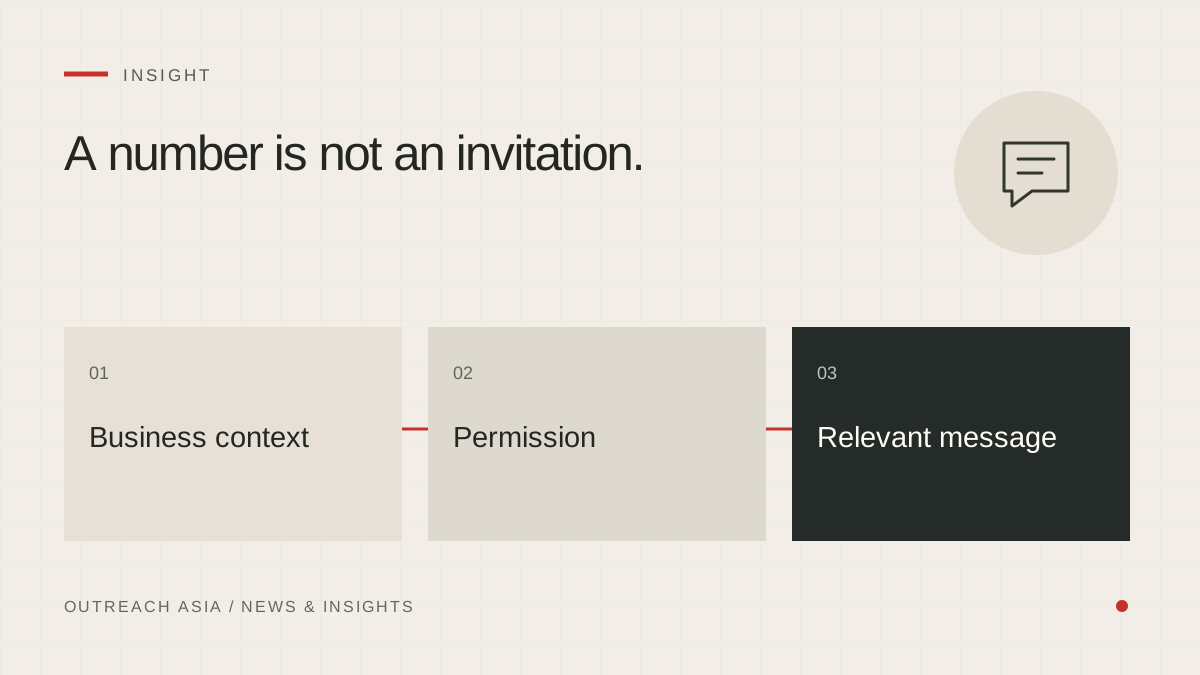
A number is not an invitation
A mobile number on a map listing or in a directory tells you how to reach someone. It does not tell you they want to hear from you on WhatsApp. WhatsApp’s own business messaging policy expects businesses to have a person’s permission before starting a conversation with them.
The clearest invitation is one the business publishes itself: a WhatsApp number or chat link on its own website, presented as a way for people to get in touch. In the lead websites our research has read, about four in ten publish one.
When a message is welcome
| Usually welcome | Usually not |
|---|---|
| The business publishes a WhatsApp link or number for enquiries on its website. | A mobile number copied from a map listing or directory. |
| The person asked to continue on WhatsApp. | A personal number with no business context. |
| A short, identified message with one question. | A sequence of messages, or large attachments, before any reply. |
| Sent during business hours in the recipient’s time zone. | Late-night or weekend messages. |
Rules that can apply
Data protection rules apply to phone numbers just as they do to email addresses, and a personal mobile number is plainly personal data. In Singapore, the Do Not Call provisions of the PDPA concern marketing messages to Singapore telephone numbers, and the Spam Control Act was extended in 2021 to cover bulk commercial messages sent to instant-messaging accounts. Check how those rules apply to your plans before messaging Singapore numbers.
Writing the message
A first WhatsApp message should be shorter than an email. Say who you are and which company you represent, why you are writing to this business, and ask one question. Do not send a catalogue until someone asks for it. If the person says they are not interested, or asks you to stop, stop, on WhatsApp and on every other channel.
A first WhatsApp message
Hello, this is [Name] from [Company], a packaging manufacturer. We saw your WhatsApp link on your website. Do you review new suppliers for takeaway packaging? Happy to send details if useful.
WhatsApp after an email reply
WhatsApp often becomes useful after a first exchange by email. A buyer who replies may suggest continuing on WhatsApp, or share a number for quick questions. That is a clear invitation, and it is worth recording when and how it was given. It is still an invitation for that conversation, not permission to add the number to future campaigns.
Keep the business record in one place. If a price, delivery date or specification is agreed on WhatsApp, confirm it by email so that both sides have the same written record.
How we apply this
Outreach Asia contacts a business on WhatsApp only where it publishes a WhatsApp number or chat link on its own website, or where permission has been recorded. A number from a map listing is not treated as an opt-in. When WhatsApp is connected, those businesses are contacted on WhatsApp first, with an email after a delay if there is no reply. First messages still wait 24 hours for review, and opt-outs stop every channel.
Before you move on.
- The business published the WhatsApp route itself, or permission is recorded.
- The message is short, identified and asks one question.
- No attachments are sent before a reply.
- Local rules on messages to phone numbers have been checked.
- A request to stop applies to every channel.
This is general information, not legal advice. Outreach Asia describes its own rules and practices here; they are not a statement that any particular campaign complies with the law.