

When a client connects its own mailbox, Outreach Asia reads it to find replies, bounces and requests to stop. That mailbox also holds everything else the client receives: newsletters, notifications, automatic replies. This release fixes two ways that ordinary mail got in the way.
Read the reply, not the footer.
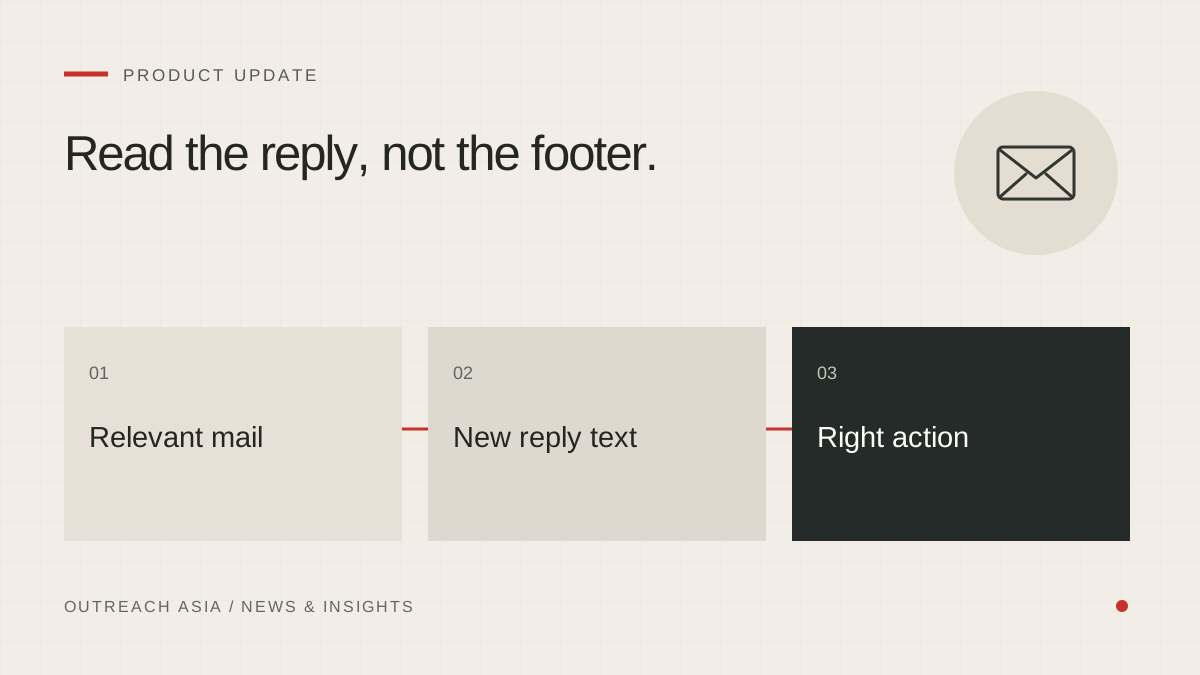
- Find relevant mail
Inspect threading and sender information before full download.
- Isolate the reply
Separate the new words from quoted text and newsletter footers.
- Choose the action
A real stop request is honoured; bulk mail is not an opt-out.
A visual summary of this article. Read the full explanation below.
Our own quoted text is not the reply.
In another case, a purchasing manager who had asked for the catalogue was put on the do-not-contact list. The mail program had wrapped the “On … wrote:” line across two lines, so our own quoted footer, with its unsubscribe wording, was read as part of the reply.
Wrapped attribution lines now end the reply, in English, Malay and Chinese. What the person actually wrote is read; what they quoted back is not.
Plain requests still count.
None of this weakens a real opt-out. A reply that simply says “unsubscribe” or “stop” still counts, and it is acted on straight away. Requests to stop are recognised from their words first, before any AI model is involved, so a model being unavailable can never let an opt-out slip through.
A full inbox can no longer hold up replies.
We never mark a client’s mail as read, because it is their mailbox, not ours. So unread newsletters came back on every check. In a busy inbox, downloading them all in full could take longer than a check is allowed to run. The check failed, no reply was read, and follow-ups waited.
The app now reads envelopes and threading headers first. Only mail that could be a reply, a bounce or a message from a company we wrote to is downloaded in full. A check that nears its time limit stops cleanly and still counts as a successful check.
What happens to a real reply.
A genuine reply is sorted, for example as interested, a question, a referral, the wrong person, not now or an opt-out. A suggested answer is drafted for your approval. Automatic replies such as out-of-office messages are recognised from their headers and are not mistaken for a person answering.
Getting this right matters beyond one client. The do-not-contact list is shared across every client, so a newsletter wrongly read as an opt-out, or a buyer wrongly removed, affects everyone. The aim is simple: every real request to stop is honoured at once, and nothing else is mistaken for one.
This article describes the product as released on 29 September 2026. Details may change as the product develops; your workspace always shows the controls available to you. Nothing here is a guarantee of replies, meetings or inbox placement.