

Research starts by finding companies. Some search terms map neatly onto a business-listing category, such as “food distributor”. Others are phrases, such as “stainless-steel kitchen equipment supplier” or “industrial packaging distributor”. Until this release, phrase searches depended on a single search provider. When its allowance ran out, those searches simply did not happen.
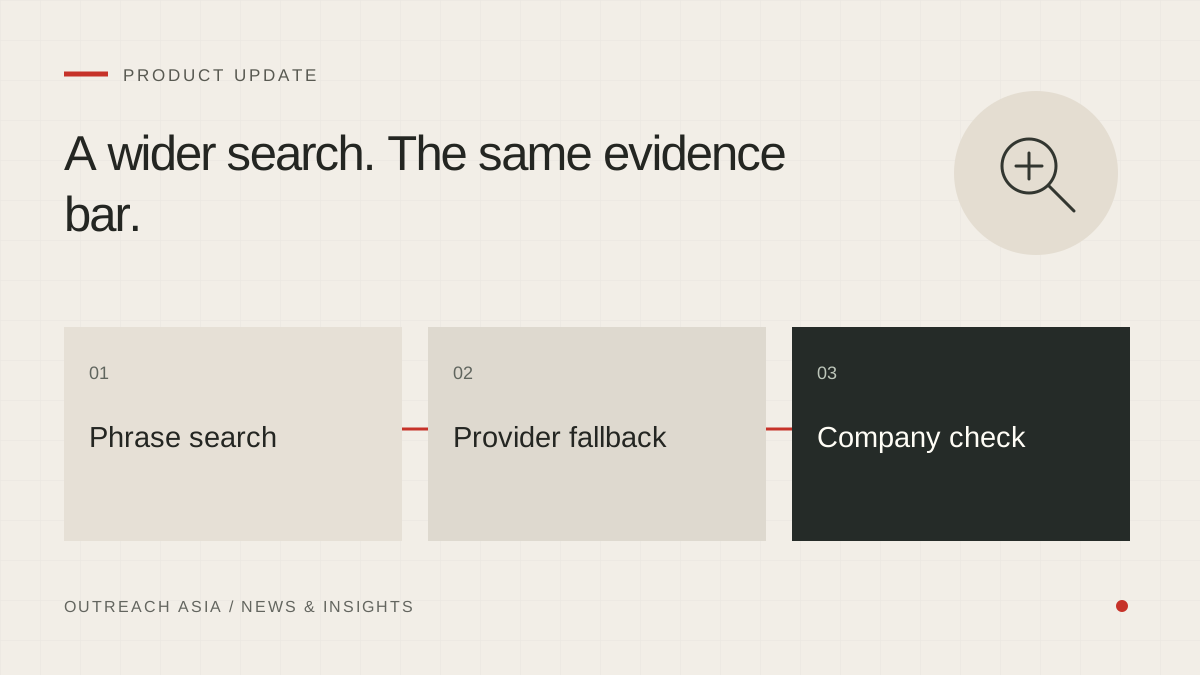
A wider search. The same evidence bar.
- Search the phrase
Google Maps search through DataForSEO is the first route.
- Use a fallback
A second provider is available if the first cannot answer.
- Handle empty results
One empty term must not stop the remaining searches.
- Qualify candidates
Read the company’s own website before suggesting contact.
A visual summary of this article. Read the full explanation below.
What went wrong.
When the phrase-search provider ran out of searches, every phrase term without a matching category went unsearched. In practice, one client’s campaigns found very little for several days, and another could not search two of its markets at all. The research was not failing loudly; it was quietly finding nothing.
What changed.
Phrase terms now go to Google Maps search through DataForSEO first. That is the same provider we already use for business listings, and the searches are metered against the same research budget. The previous provider remains as a failover if the first cannot answer.
A search that returns no results is now treated as an empty answer for that term, not as a sign that the account has stopped working. One quiet term no longer stops the rest.
What it means for your campaigns.
More of the terms your campaigns use are actually searched, in every market they cover. The way the research budget is set and controlled does not change.
Why phrase terms matter.
Listing categories are broad. A category such as “wholesaler” covers thousands of businesses with little in common. The companies a campaign is looking for are often better described in a few words of their own trade, the way they describe themselves on their websites. Phrase terms let research start closer to the right companies, which means less time spent reading websites that were never going to fit.
What stays the same.
A search result is still only a starting point. Each company found is checked against the campaign’s criteria by reading its own website, the evidence is kept with its source page, and a contact address is only ever taken from the company’s own site. Wider search means more candidates to check, not more emails sent without checking.
Also in this release: offers are not claims.
The statement checker had been holding some drafts that offered to send a catalogue. It read the offer as an unproven claim about the business, as if “may I send our catalogue?” asserted something about the buyer’s trade.
The checker now knows that offers, next steps and the fact of writing to a prospective customer are not claims. It also accepts the reviewed safe wording saved with each statement. Factual claims are still checked exactly as before.
This article describes the product as released on 28 September 2026. Details may change as the product develops; your workspace always shows the controls available to you. Nothing here is a guarantee of replies, meetings or inbox placement.